
Is TMJ arthroscopy worth it?
- Home
- Blog
"Is it really worth it, doctor?" When a patient asks me this about TMJ arthroscopy, I know they are weighing many things at once: the pain they live with every day, the fear of surgery, the time off work, the cost, and whether it will actually help. These are exactly the right things to think about.
My honest answer is this: for the right patient, TMJ arthroscopy is one of the most worthwhile treatments in jaw joint care. For the wrong patient, it will not solve the problem. The key is understanding which group you fall into. Let me help you with that.
Quick Answer
- TMJ arthroscopy is usually worth it when the problem is inside the joint (such as a locked or displaced disc, adhesions, or joint inflammation) and non-surgical treatment has not worked.
- In carefully selected patients, studies have consistently reported meaningful improvement in pain and mouth opening in the large majority of cases.
- It is minimally invasive, with tiny scars, a short recovery, and a low complication rate.
- It is usually not the right choice if your pain comes mainly from the jaw muscles, stress, or teeth grinding, without a problem inside the joint.
What TMJ Arthroscopy Can Do
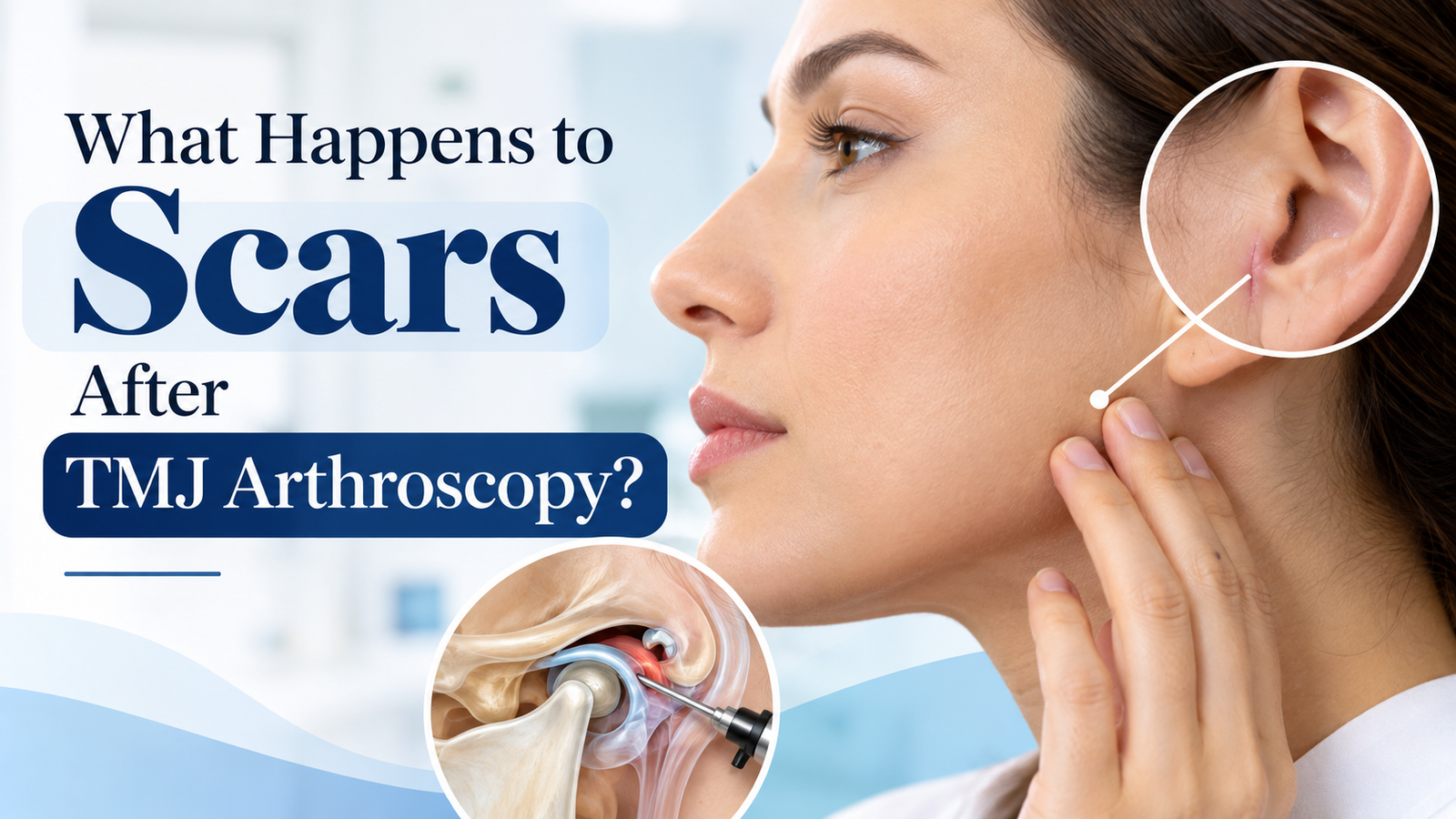
TMJ arthroscopy is a keyhole procedure. Through one or two tiny punctures in front of the ear, I insert a thin camera and fine instruments into the joint. This allows me to both see and treat the problem in a single procedure:
- Wash out the joint to remove inflammatory substances that cause pain
- Release adhesions (internal scar tissue) that restrict jaw movement
- Free a stuck disc and improve its movement
- Smooth roughened joint surfaces in arthritis
- Place medication directly into the joint where needed
- Directly assess the joint, which helps plan further treatment if required
In other words, it treats the joint from the inside without opening it up.
Who Benefits Most From TMJ Arthroscopy?
In my experience, arthroscopy gives the best results in patients who have:
- Closed lock: the jaw suddenly cannot open fully, often after clicking stops
- Painful clicking or catching due to disc displacement
- Limited mouth opening caused by adhesions inside the joint
- Joint pain from inflammation or early-to-moderate arthritis
- Symptoms that have not improved after 3–6 months of proper non-surgical treatment such as medicines, splints, physiotherapy, and habit changes
- Imaging (such as MRI) and clinical examination that clearly point to the joint as the source of the problem
When It May Not Be Worth It
Arthroscopy is not a cure for every type of jaw pain. It is less likely to help when:
- The pain comes mainly from the jaw muscles (myofascial pain), not the joint
- Symptoms are mild and still responding to conservative treatment
- The main cause is stress, clenching, or grinding that has not been addressed
- The joint is severely damaged, for example in advanced arthritis or ankylosis, where open surgery or joint replacement may be needed instead
- The pain is part of a widespread pain condition that affects many areas of the body
This is why a careful diagnosis matters more than anything. I would much rather tell a patient they do not need surgery than perform a procedure that will not help them.
The success of TMJ arthroscopy begins in the consultation room, not the operating theatre. Choosing the right patient is half the treatment.
Benefits vs Drawbacks: An Honest Comparison
| Benefits | Drawbacks |
|---|---|
| Treats the joint directly from the inside | It is still a surgical procedure, usually under general anaesthesia |
| Only tiny punctures, which usually fade to barely visible marks | Some soreness, swelling, and stiffness for the first few days |
| Often a same-day or overnight stay | Requires commitment to jaw exercises afterwards |
| Most patients return to desk work within about a week | Soft diet for a few weeks |
| Low complication rate compared with open surgery | Small risk of complications (see below) |
| Allows the surgeon to see the joint and plan further care accurately | Not every patient improves; some may need further treatment |
What Are the Risks?
Every procedure carries some risk, and you deserve to know them clearly. With arthroscopy, serious complications are uncommon. Possible risks include:
- Temporary swelling, ear fullness, or a change in bite for a few days
- Temporary numbness of the skin in front of the ear
- Temporary weakness of the forehead or eyelid due to nerve irritation, which usually recovers
- Infection or bleeding (rare)
- Injury to the ear canal (rare)
- Symptoms not improving as much as hoped, needing further treatment
I discuss these in detail with every patient, along with the steps I take to keep them as low as possible.
How Arthroscopy Compares With Other Options
| Treatment | Best suited for | Invasiveness |
|---|---|---|
| Conservative care (medicines, splint, physiotherapy, habit control) | Most TMJ problems initially; muscle-related pain | Non-surgical |
| Arthrocentesis (joint wash with needles) | Joint inflammation, early closed lock | Minimal |
| Arthroscopy | Disc problems, adhesions, closed lock, arthritis not responding to simpler care | Minimally invasive |
| Open joint surgery | Advanced disc or joint damage | More invasive |
| Total joint replacement | Severely destroyed or fused joints | Most invasive |
Arthroscopy sits in the middle of this ladder. It offers far more than injections or medicines alone, while avoiding the larger incision and longer recovery of open surgery.
What Results Can You Realistically Expect?
When arthroscopy is done for the right reason, most patients notice:
- Less joint pain, often starting within the first few weeks
- Better mouth opening, especially in patients with closed lock
- Easier eating, speaking, and yawning
- Less dependence on painkillers
The full benefit usually develops over 3–6 months, and it depends heavily on doing jaw exercises regularly and controlling habits like clenching and grinding. Arthroscopy improves the joint, but long-term success is a partnership between the surgeon and the patient.
Questions to Ask Before You Decide
- What exactly is wrong inside my joint, and what do my scans show?
- Have I tried enough non-surgical treatment?
- What will be done during my arthroscopy?
- What improvement can I realistically expect in my case?
- What are the risks for me specifically?
- How long will I need off work, and what will recovery involve?
- What happens if arthroscopy does not fully solve the problem?
A good surgeon will be happy to answer all of these. If something is unclear, ask again.
My Message to You
If you have been living with a locked jaw, painful clicking, or joint pain that has not improved despite months of proper treatment, TMJ arthroscopy can be genuinely life-changing. It treats the source of the problem through tiny punctures, with a short recovery and a low risk of complications.
But it is only worth it if it is the right treatment for your joint. During your consultation, I will examine you carefully, review your scans, and explain honestly whether arthroscopy, a simpler option, or a different approach is best for you. My goal is not to perform surgery; it is to get you eating, talking, and living comfortably again.
Frequently Asked Questions
Is TMJ arthroscopy worth it?
For patients with a confirmed joint problem, such as a displaced or locked disc, adhesions, or joint inflammation, that has not improved with non-surgical care, TMJ arthroscopy is often very worthwhile. It is less likely to help pain that comes mainly from the jaw muscles.
What is the success rate of TMJ arthroscopy?
Published studies have reported meaningful improvement in pain and jaw function in the large majority of carefully selected patients. Your individual chance of success depends on your diagnosis, how long the problem has been present, and how well you follow the recovery plan.
Is arthroscopy better than arthrocentesis?
Both wash out the joint, but arthroscopy also lets the surgeon see inside and treat adhesions, disc problems, and rough surfaces directly. Arthrocentesis is simpler and may be tried first in some cases; arthroscopy is often chosen when more treatment inside the joint is needed.
Can TMJ problems come back after arthroscopy?
Symptoms can return in some patients, especially if habits like clenching and grinding continue or exercises are not followed. Wearing a night guard when advised, protecting the joint, and attending follow-ups help maintain long-term results.
How do I know if I need TMJ arthroscopy?
You may be a candidate if you have jaw locking, painful clicking, or limited opening that has not improved after several months of proper non-surgical treatment, and your examination and MRI point to a problem inside the joint. A specialist assessment is essential to decide.
Disclaimer: This article is for general educational purposes and does not replace personal medical advice. Treatment decisions and outcomes vary between individuals. Please consult your treating surgeon for advice specific to your condition.