
How risky is arthroscopic surgery?
- Home
- Blog
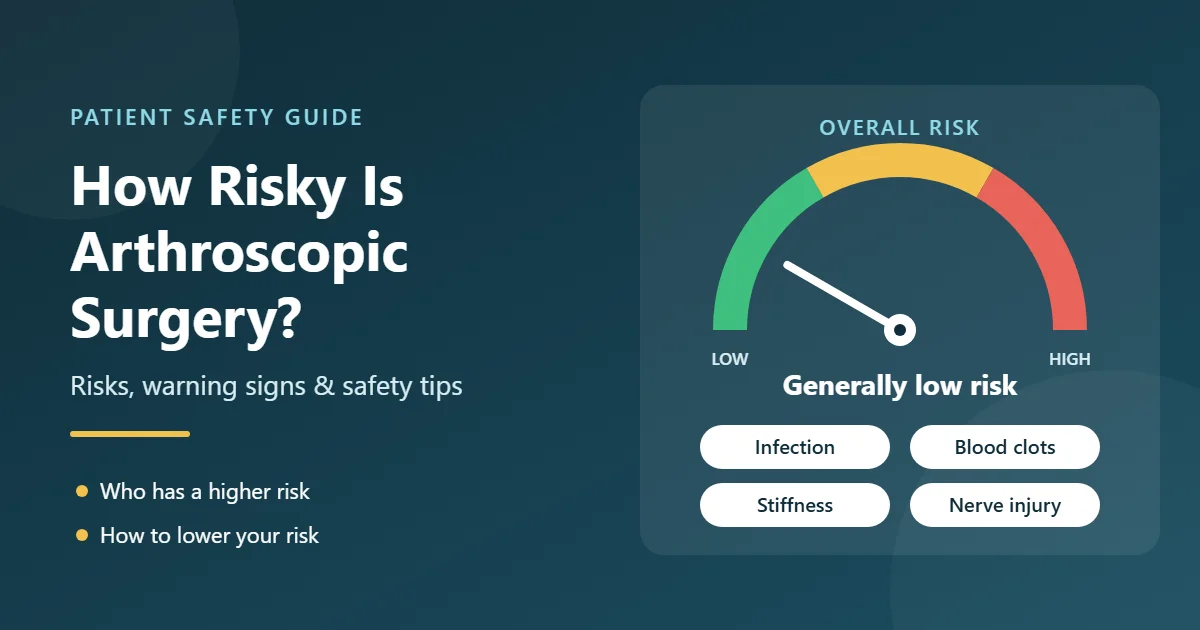
Arthroscopic surgery is generally considered a low-risk procedure. Because it uses small incisions, it usually causes less pain, less scarring and a quicker recovery than open surgery. Serious complications are uncommon, but every surgery has some risk. This guide explains the possible risks of arthroscopic surgery, who has a higher risk, how to reduce it and which warning signs need prompt medical attention.
Quick answer
- Arthroscopic surgery is usually safe, and most patients have no serious complications.
- Possible risks include infection, bleeding, blood clots, stiffness, nerve injury and problems related to anaesthesia.
- The level of risk depends on the joint, the procedure, your general health and the surgeon's experience.
- Following your surgeon's instructions and physiotherapy plan can help lower the risk of problems.
Why Arthroscopy Is Considered Lower Risk
In arthroscopy, the surgeon inserts a small camera and fine instruments into the joint through tiny cuts instead of opening the joint fully. This usually means:
- Less damage to the surrounding muscles and tissues
- Smaller wounds and a lower chance of wound problems
- Less pain after surgery
- A shorter hospital stay, often the same day
- An earlier return to normal movement
Even so, "minimally invasive" does not mean "risk-free". It is still surgery, and it should be done for the right reason by a trained surgeon.
Common Side Effects After Arthroscopy
These are expected and usually improve on their own:
- Pain and soreness around the joint
- Swelling and mild bruising
- Temporary stiffness
- Small amounts of fluid leaking from the incisions in the first day or two
- Tiredness for a few days after anaesthesia
These side effects are not complications. They are a normal part of healing and are usually managed with rest, ice, elevation, medicines and gentle exercises.
Possible Risks and Complications
1. Infection
Infection after arthroscopy is uncommon. It may affect the skin around a small cut or, more rarely, the inside of the joint. A joint infection is serious and needs urgent treatment, sometimes with antibiotics and a further washout procedure.
2. Bleeding Into the Joint
Some bleeding is normal, but sometimes blood collects inside the joint and causes marked swelling and pain. This may need draining.
3. Blood Clots
A deep vein thrombosis (DVT) is a blood clot, usually in the leg. Rarely, part of the clot can travel to the lungs, which is called a pulmonary embolism and is a medical emergency. The risk is higher after leg surgery, with reduced movement, or in people with other risk factors. Your surgeon may recommend early walking, leg exercises or blood-thinning medicine.
4. Joint Stiffness
Some patients develop stiffness or scar tissue inside the joint, which can limit movement. This is more likely after ligament reconstruction or shoulder surgery. Starting your physiotherapy as advised is one of the best ways to prevent it.
5. Nerve or Blood Vessel Injury
Small skin nerves near the incisions can be affected, causing a patch of numbness or tingling. This is often temporary. Injury to a major nerve or blood vessel is rare.
6. Ongoing Pain or Incomplete Relief
Arthroscopy may not fully relieve symptoms, especially when the joint already has significant arthritis. Some people need more treatment later.
7. Repair or Graft Failure
A repaired meniscus, tendon or ligament graft can fail or tear again. This may happen because of a new injury, poor healing, or returning to sport too early.
8. Anaesthesia Risks
Arthroscopy may be done under local, regional or general anaesthesia. Most people have only minor effects such as nausea or a sore throat. Serious reactions are rare. Tell your anaesthetist about any medical conditions, allergies and previous reactions to anaesthesia.
9. Rare Complications
- Damage to cartilage inside the joint
- Breakage of a small surgical instrument inside the joint
- Excessive swelling caused by fluid used during surgery
- Complex regional pain syndrome, a long-lasting pain condition
Risks by Joint
| Joint | Risks to be aware of |
|---|---|
| Knee | Swelling, blood clots, stiffness after ligament surgery, and numbness near the incisions |
| Shoulder | Stiffness, ongoing pain, and failure of a rotator cuff or labrum repair |
| Hip | Temporary numbness from traction during surgery, and in some cases persistent pain |
| Ankle | Numbness on the top of the foot from irritation of a small skin nerve |
| Jaw (TMJ) | Swelling, temporary bite changes and, rarely, temporary facial weakness |
Who Has a Higher Risk?
Your risk may be higher if you:
- Smoke or use tobacco
- Have diabetes, especially if it is poorly controlled
- Are overweight
- Have heart, lung or kidney disease
- Have a past blood clot or a clotting disorder
- Take blood-thinning medicines
- Have a weak immune system
- Have an active skin infection near the joint
Tell your surgeon about your medical conditions and all your medicines before surgery. Some medicines may need to be stopped or changed, but only on medical advice.
How to Reduce the Risk of Complications
Before Surgery
- Choose a qualified surgeon with experience in your procedure.
- Share your full medical history, allergies and medicine list.
- Stop smoking as early as possible.
- Keep diabetes and blood pressure under control.
- Follow the fasting and medication instructions you are given.
After Surgery
- Keep the dressings clean and dry as instructed.
- Move your ankles and toes, and walk as soon as your surgeon allows.
- Use ice, elevation and pain medicines as advised.
- Follow your physiotherapy programme closely.
- Don't return to sport or heavy work before you are cleared.
- Attend all follow-up appointments.
Warning Signs After Arthroscopy
Contact your surgeon promptly if you notice:
- Fever or chills
- Increasing redness, warmth or pus from an incision
- Pain or swelling that gets worse instead of better
- Pain, swelling, warmth or tenderness in the calf or thigh
- New numbness, weakness, or a cold or pale limb
- Bleeding that does not stop
Seek emergency care immediately if you have sudden shortness of breath, chest pain or cough up blood, as these can be signs of a blood clot in the lungs.
Arthroscopy vs. Open Surgery
| Factor | Arthroscopic surgery | Open surgery |
|---|---|---|
| Incision size | Small cuts, usually less than 1 cm | Larger incision |
| Tissue damage | Usually less | Usually more |
| Pain after surgery | Often less | Often more |
| Hospital stay | Often same day or one night | Usually longer |
| Scarring | Small scars | Larger scar |
Arthroscopy is not suitable for every problem. Your surgeon will recommend the approach that best fits your condition.
Is Surgery Always Necessary?
Not always. Some joint problems improve with physiotherapy, activity changes, medicines or injections. For example, people with knee pain caused mainly by arthritis often do not benefit much from arthroscopy. Ask your surgeon whether non-surgical treatment is a reasonable first step, and consider a second opinion before major surgery.
Frequently Asked Questions
Is arthroscopic surgery safe?
Yes, it is generally safe when done for the right reason by a trained surgeon. Most people recover without serious complications.
What is the most common complication of arthroscopy?
Temporary pain, swelling and stiffness are the most common problems after surgery. Serious complications such as joint infection or blood clots are uncommon.
Can arthroscopy make a joint worse?
It is possible but uncommon. Symptoms may continue if the joint already has advanced arthritis, or if a repair does not heal well.
Is arthroscopic surgery painful?
You should not feel pain during surgery because of anaesthesia. Some soreness afterwards is normal and is usually controlled with medicines, ice and rest.
How long does it take to recover from arthroscopy?
Simple procedures may need a few weeks for recovery, while ligament reconstruction or tendon repair can take several months.
The Bottom Line
Arthroscopic surgery is generally low risk and offers clear advantages over open surgery for many joint problems. Complications such as infection, blood clots, stiffness and nerve injury are uncommon but possible. You can lower your risk by choosing an experienced surgeon, sharing your full medical history, following aftercare instructions and committing to rehabilitation. If you notice any warning signs, contact your doctor promptly.
Medical disclaimer: This article is for general information only and is not a substitute for professional medical advice. Talk to your surgeon about the specific risks and benefits of your procedure.