
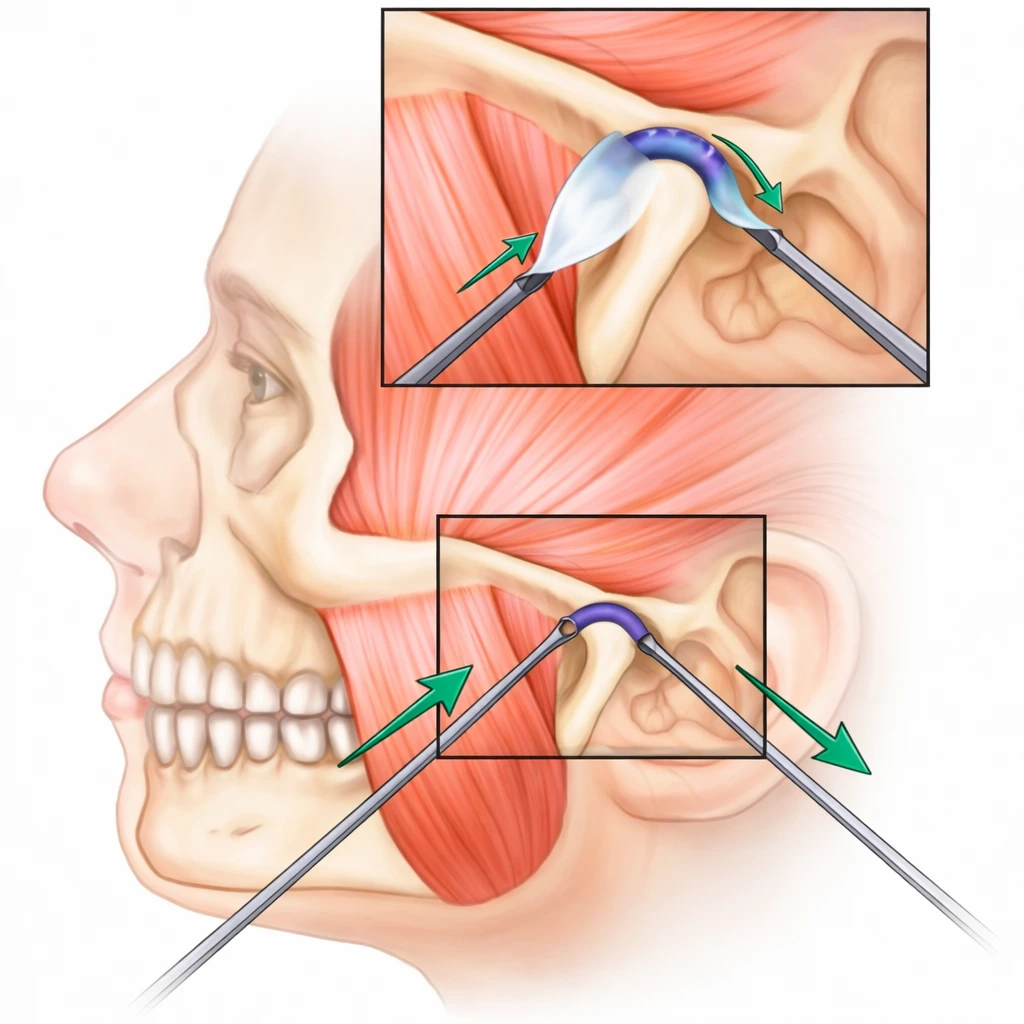
Temporomandibular Joint (TMJ) disorders are more common than many people realize, yet they are often misunderstood and ignored until the pain starts interfering with daily life. As a TMJ arthroscopy surgeon in India, I frequently meet patients who have been living with jaw pain, headaches, clicking sounds, or difficulty opening their mouth for months or even years.
In this blog, I will explain what TMJ disorders are, their common causes, and how advanced treatments like TMJ arthroscopy can help patients regain comfort and function—without visible scars and with minimal downtime.
The temporomandibular joint connects your lower jaw (mandible) to the skull, just in front of each ear. It is one of the most complex joints in the human body, allowing movements such as opening, closing, and side-to-side motion of the jaw.
When this joint or the surrounding muscles stop working in harmony, it can lead to TMJ disorders (TMD).
From my clinical experience as a maxillofacial surgeon in Mumbai, TMJ problems usually arise due to one or a combination of the following factors:
Accidents, falls, or a direct blow to the jaw can damage the TMJ or the disc inside it. Even old injuries can cause TMJ symptoms years later.
Chronic grinding or clenching—often linked to stress—puts excessive pressure on the TMJ, leading to inflammation, pain, and restricted movement.
Inside the TMJ is a small cartilage disc that allows smooth movement. If this disc slips out of position, patients may experience clicking, popping, locking of the jaw, or pain while chewing.
Conditions like osteoarthritis or rheumatoid arthritis can affect the TMJ, causing joint degeneration, stiffness, and chronic discomfort.
Malocclusion (improper bite), missing teeth, or poorly designed dental work can alter jaw mechanics and strain the TMJ over time.
Emotional stress often manifests physically as muscle tension in the jaw, face, and neck, contributing to TMJ disorders.
TMJ disorders can present in different ways. Common symptoms include:
If these symptoms persist, consulting a TMJ arthroscopy surgeon in India can help identify the exact cause and prevent further joint damage.
TMJ arthroscopy is a minimally invasive surgical procedure used to diagnose and treat disorders of the jaw joint. It involves inserting a small camera (arthroscope) into the TMJ through a tiny incision.
This advanced technique allows the surgeon to:
The TMJ arthroscopy procedure is usually performed under general anesthesia and typically takes 30 to 90 minutes, depending on the complexity of the condition.
Most patients can return to normal activities within a few days to a week.
One of the most common concerns patients have is about scarring.
The good news is that TMJ arthroscopy scar is almost invisible. The incisions are extremely small and strategically placed near the ear, healing very well over time. In most cases, scars are barely noticeable.
TMJ arthroscopy is considered when:
As an experienced TMJ arthroscopy surgeon in India, my goal is always to choose the least invasive and most effective treatment tailored to each patient.
TMJ disorders require precise diagnosis and specialized care. With advancements in maxillofacial surgery, patients no longer need to live with chronic jaw pain or discomfort.
If you are experiencing TMJ symptoms and are looking for expert guidance, consulting a qualified TMJ arthroscopy surgeon in India can make a significant difference in your treatment outcome.
TMJ disorders may start small, but if left untreated, they can significantly impact daily life. Early diagnosis and the right treatment approach—whether conservative management or TMJ arthroscopy—can restore comfort, function, and confidence.
If jaw pain, clicking, or restricted movement is affecting you, don’t ignore the signs. Modern maxillofacial surgery offers safe, effective, and minimally invasive solutions to help you smile, speak, and eat comfortably again.
We are a team of experienced maxillofacial specialists dedicated to advanced, patient-focused TMJ care. Visit our website or contact us today to book a consultation and take the first step toward pain-free living.
Oral and Maxillofacial Surgery Center in Mumbai. TMJ Arthroscopy & Total TM Joint Replacement Surgery, USA